
Many people in Pakistan dream of selling online. Some start a Facebook page, get a few orders, then give up after fake COD orders, delivery delays and low profits. The good news is that these problems have clear solutions. So, this guide on ecommerce business in Pakistan gives you clear, practical answers.
This guide explains how to start an ecommerce business in Pakistan the right way in 2026. You will learn how to choose products, pick a selling platform, set up payments and delivery, handle registration and taxes, and market your store, with real lessons from e-commerce projects we have run at SuperioTech.
Table of Contents
- How Do You Start an Ecommerce Business in Pakistan?
- Why Ecommerce Is Growing in Pakistan
- Step 1: Choose a Profitable Niche
- Step 2: Test Demand Before Buying Stock
- Step 3: Find Reliable Suppliers
- Step 4: Choose Where to Sell
- Step 5: Set Up Payments
- Step 6: Partner With Couriers
- Step 7: Register Your Business and Understand Taxes
- Step 8: Reduce Fake Orders and Returns
- Step 9: Market Your Ecommerce Business
- Step 10: Track the Right Numbers
- How Much Money Do You Need to Start?
- Branding Your Ecommerce Business in Pakistan
- Customer Service for an Ecommerce Business in Pakistan
- Legal and Policy Pages You Need
- Using Data to Grow Your Ecommerce Business in Pakistan
- Scaling: From Side Business to Full-Time Brand
- Common Mistakes When Starting an Ecommerce Business in Pakistan
- Conclusion
How Do You Start an Ecommerce Business in Pakistan?
To start an ecommerce business in Pakistan, choose a profitable niche, test demand, find reliable suppliers, pick a sales channel such as Daraz, Instagram or your own Shopify or WordPress store, set up cash on delivery and online payments, partner with a courier, and market your products through social media, Google and SEO.
Each step matters. So, let us go through them one by one.
Why Ecommerce Is Growing in Pakistan
Online shopping keeps growing because more people have smartphones and mobile internet. According to the Pakistan Telecommunication Authority, the country has well over 140 million broadband subscribers. In addition, the State Bank of Pakistan continues to push digital payments through initiatives like Raast.
“Pakistan has more than 140 million broadband subscribers, most of them on mobile.” — based on PTA telecom indicators
As a result, customers in big cities and smaller towns now order clothes, electronics, groceries and gifts online every day.
Step 1: Choose a Profitable Niche
Your niche decides your competition, margins and marketing costs. Look for products that are:
- Easy to ship and not fragile.
- In steady demand, not just one season.
- Priced so you can earn a healthy margin after delivery and returns.
- Something you understand or care about.
Popular niches include women’s clothing, skincare, fragrances, home décor, mobile accessories, kids’ products and organic food.
Step 2: Test Demand Before Buying Stock
Do not buy large stock first. Instead, test demand with small batches. For example, post products on Instagram, run a small ad and see how many people message you. You can also check search demand with Google Trends or keyword tools.
Step 3: Find Reliable Suppliers
Good suppliers keep your quality steady. Common sources include local wholesale markets in Karachi, Lahore and Faisalabad, manufacturers and imports. Always order samples first, and agree on quality, delivery times and return terms in writing.
Step 4: Choose Where to Sell
| Sales channel | Pros | Cons |
|---|---|---|
| Daraz and marketplaces | Ready traffic, buyer trust | Commission, price wars, less brand control |
| Instagram and Facebook | Free to start, easy to reach buyers | Orders in DMs are hard to manage |
| Shopify store | Fast setup, professional checkout | Monthly fee in dollars |
| WordPress + WooCommerce | Full control, lower running cost | Needs technical maintenance |
In our experience, the best approach is to combine channels. Use social media to find customers and your own website to build a brand you control. Compare platforms in our WordPress vs Shopify guide.
Planning to Sell Online?
Build Your Ecommerce Business With SuperioTech
From store setup to payments, delivery apps and marketing, we handle the full journey for you.
Step 5: Set Up Payments
Offer more than one payment method. Most Pakistani buyers still prefer cash on delivery, but online payments reduce returns.
- Cash on delivery (COD): must-have for trust.
- Bank transfer and Raast: good for higher-value orders.
- Payment gateways: accept cards and wallets such as JazzCash and Easypaisa.
Step 6: Partner With Couriers
Delivery is where many stores lose customers. Work with one or two reliable couriers, such as TCS, Leopards, PostEx, Trax or M&P. Compare rates, COD payment cycles and coverage. Also, show realistic delivery times on your product pages.
Step 7: Register Your Business and Understand Taxes
You can start as an individual. However, as you grow, register your business and get a National Tax Number (NTN) from the Federal Board of Revenue. Many payment gateways and marketplaces also ask for business documents. We recommend talking to a tax adviser about your exact obligations.
Step 8: Reduce Fake Orders and Returns
Fake COD orders can destroy your profits. So, use these simple steps:
- Call or WhatsApp customers to confirm orders above a certain value.
- Offer a small discount for advance payment.
- Write clear size charts and product details.
- Keep a list of repeat fake-order numbers.
Step 9: Market Your Ecommerce Business
Even the best store needs traffic. Mix these channels:
- Meta and TikTok ads: great for visual products.
- Google Shopping and Search ads: reach people already searching.
- SEO and blogging: bring free traffic over time.
- Influencers: build trust quickly in fashion and beauty.
- WhatsApp broadcasts: bring back past customers.
Read our guide to the best paid ads platforms to decide where to spend first.
Step 10: Track the Right Numbers
Many sellers only look at total sales. Instead, track profit per order after product cost, delivery, returns and ad spend. Also track your return rate, repeat customer rate and cost per order from ads.
How Much Money Do You Need to Start?
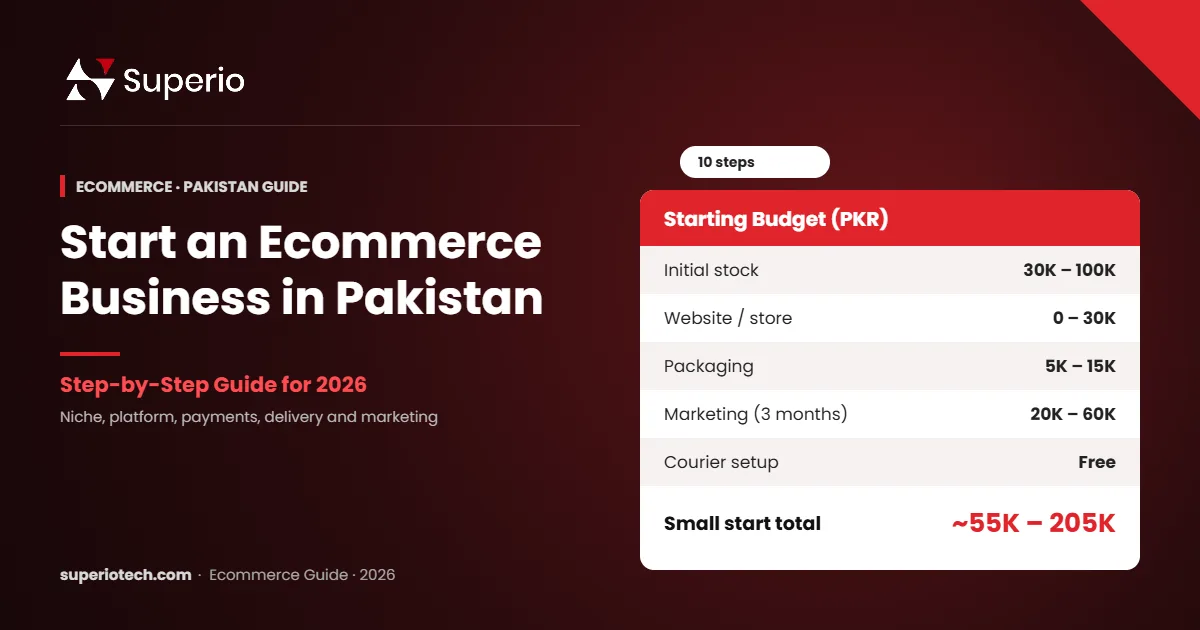
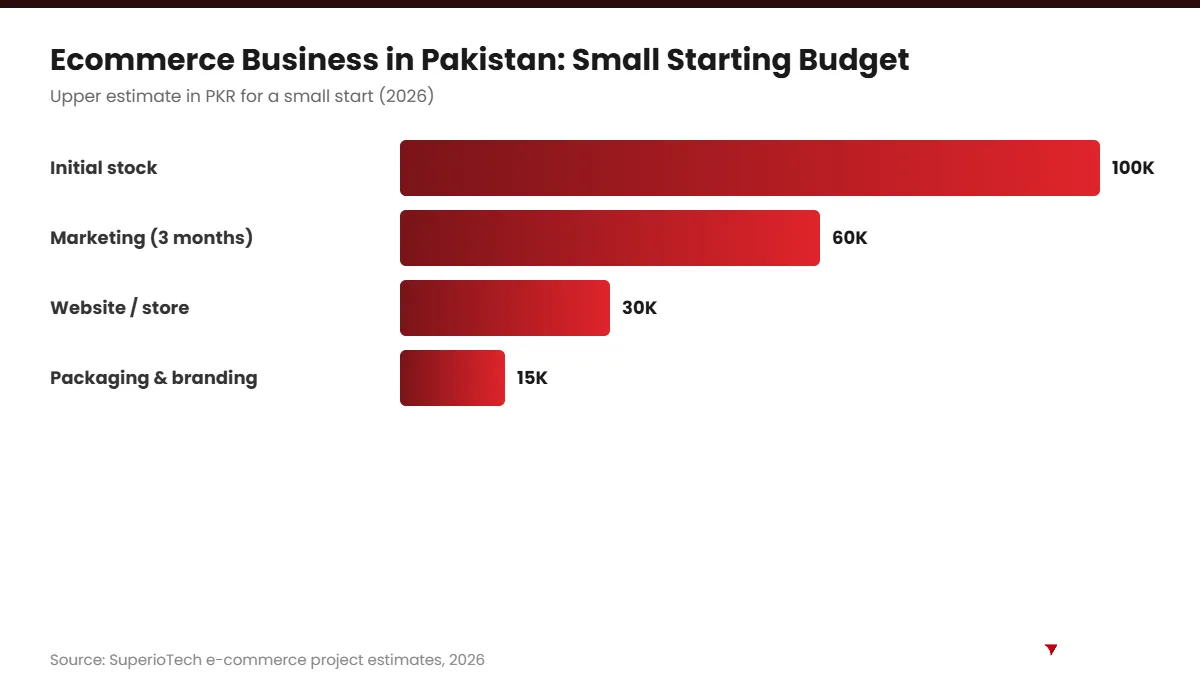
| Item | Small start (PKR) | Serious start (PKR) |
|---|---|---|
| Initial stock | 30,000 – 100,000 | 200,000 – 500,000+ |
| Website or store | 0 – 30,000 | 80,000 – 250,000 |
| Packaging and branding | 5,000 – 15,000 | 30,000 – 100,000 |
| Marketing (first 3 months) | 20,000 – 60,000 | 150,000 – 400,000 |
These are estimates based on typical small and medium projects. Your budget will depend on your niche and goals.
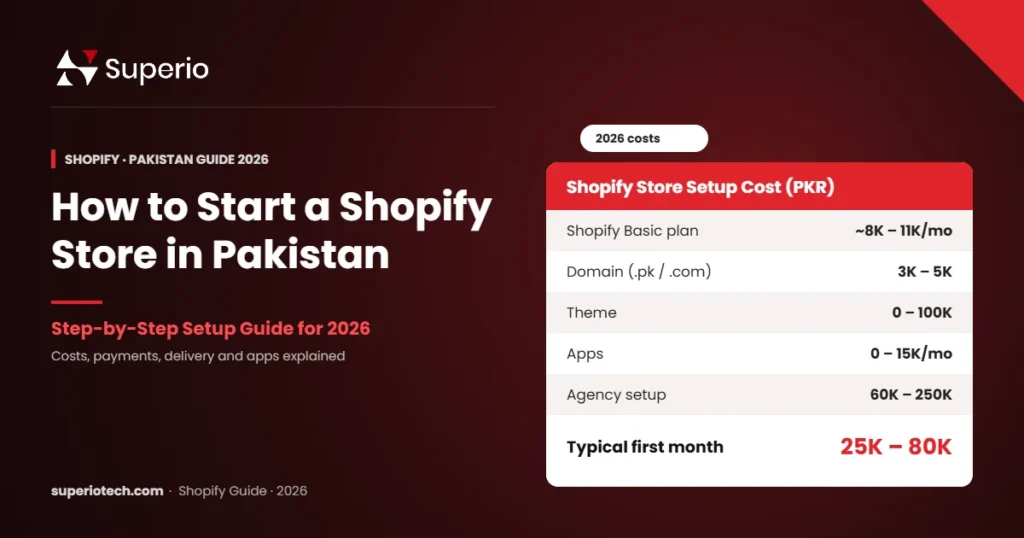
If you are ready to build a proper store, see our step-by-step guide on how to start a Shopify store in Pakistan, or explore our e-commerce agency services in Pakistan.
Branding Your Ecommerce Business in Pakistan
Many sellers compete only on price. However, price wars rarely end well. Instead, a strong brand lets you charge fair prices and build loyal customers.
- Name: short, easy to spell and available as a domain and Instagram handle.
- Logo: simple and clear on a phone screen. Read our guide on logo types for ideas.
- Packaging: branded boxes or stickers make unboxing memorable.
- Tone of voice: friendly, helpful and consistent across all channels.
- Customer service: fast, polite replies on WhatsApp build reputation.
In our experience, customers happily pay a little more to a brand they trust.
Customer Service for an Ecommerce Business in Pakistan
Getting a new customer costs much more than keeping an existing one. Therefore, good service is one of the best growth strategies for any ecommerce business in Pakistan.
- Reply to messages within a few hours.
- Share tracking details as soon as an order ships.
- Handle complaints calmly and quickly.
- Make exchanges easy, especially for clothing sizes.
- Follow up after delivery to ask for feedback.
- Reward repeat customers with small discounts or gifts.
Legal and Policy Pages You Need
Clear policies protect both you and your customers. In addition, they build trust with first-time buyers. Every store should have:
| Page | What it covers |
|---|---|
| Shipping policy | Delivery areas, times and charges |
| Return and exchange policy | Conditions, time limits and process |
| Privacy policy | How you collect and use customer data |
| Terms and conditions | Rules for using your store |
| Contact page | Phone, WhatsApp, email and address |
Keep these pages simple and honest. Also, link them in your website footer.
Using Data to Grow Your Ecommerce Business in Pakistan
Successful sellers make decisions based on numbers, not guesses. Set up Google Analytics 4 and your ad platform pixels from day one. Then, review these figures every month:
- Best-selling products and categories.
- Traffic sources that bring the most sales.
- Conversion rate on mobile and desktop.
- Average order value.
- Return rate by product.
- Profit per order after all costs.
As a result, you can stock more of what sells, fix weak products and spend ad money where it works.
Scaling: From Side Business to Full-Time Brand
Once your store has steady orders, it is time to grow. Here is a typical path we see among successful Pakistani sellers:
- Stage 1 – Validate: sell a small range through social media and COD.
- Stage 2 – Professionalise: launch your own website and branded packaging.
- Stage 3 – Systemise: hire help for packing and customer service; use inventory tools.
- Stage 4 – Expand: add new categories, marketplaces and paid ads.
- Stage 5 – Build the brand: invest in SEO, influencers and loyalty programmes.
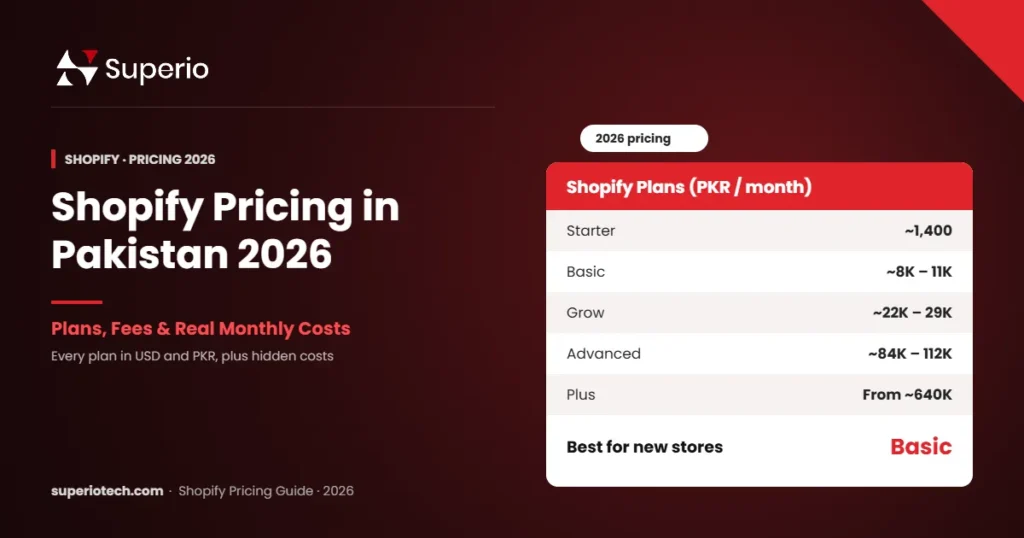
Do not rush stages. Each one builds the foundation for the next. For platform guidance, compare Shopify pricing in Pakistan with other options, and explore real e-commerce examples for inspiration.
Common Mistakes When Starting an Ecommerce Business in Pakistan
- Buying too much stock before testing demand.
- Ignoring delivery and return costs when setting prices.
- Relying on one sales channel only.
- Skipping order confirmation for COD.
- Spending on ads without conversion tracking.
- Giving up after the first slow month.
Avoid these mistakes, and your ecommerce business in Pakistan will have a much stronger chance of long-term success.
Conclusion
Starting an ecommerce business in Pakistan is more possible than ever. Choose a clear niche, test demand, build reliable supplier and courier partnerships, offer COD and online payments, and market consistently. Above all, track your real profit per order.
If you want expert help building and growing your online store, SuperioTech is ready to support you.
Ready to Launch Your Online Business?
Book a Free Ecommerce Strategy Session
Tell us your products and goals, and we will map out a clear plan to start and grow.