
Every week, a business owner asks us the same thing: “Should I build my website on WordPress or Shopify?” Both platforms are popular in Pakistan. Both can look great. However, choosing the wrong one can cost you months of work and thousands of rupees. So, this guide on WordPress vs Shopify gives you clear, practical answers.
In this guide on WordPress vs Shopify, we compare costs in PKR, ease of use, SEO, payments and growth. By the end, you will know which platform fits your business, whether you run a clothing brand in Lahore or a service company in Karachi.
Table of Contents
- WordPress vs Shopify: Which Is Better for Pakistani Businesses?
- What Is WordPress?
- What Is Shopify?
- Cost Comparison in Pakistan (2026)
- Ease of Use
- Design and Flexibility
- SEO: Which Platform Ranks Better?
- Payments and Delivery in Pakistan
- Security and Maintenance
- WordPress vs Shopify: Side-by-Side Summary
- Which One Should You Choose?
- WordPress vs Shopify: Real Business Scenarios
- WordPress vs Shopify: Speed and Performance
- WordPress vs Shopify: Which Platform Scales Better?
- WordPress vs Shopify for Blogging and Content
- WordPress vs Shopify: Ownership and Control
- Our Recommendation for 2026
- Questions to Ask Before You Decide
- Conclusion
WordPress vs Shopify: Which Is Better for Pakistani Businesses?
In the WordPress vs Shopify debate, Shopify is better if you sell products and want an easy, all-in-one store. WordPress is better if you need a service website, a strong blog or full control over design and costs. For most Pakistani service businesses, WordPress is the smarter choice.
Put simply, Shopify is a rented, fully managed shop. WordPress is your own building, so you control everything, but you also look after it.
What Is WordPress?
WordPress is free, open-source software that powers a huge share of websites worldwide. According to W3Techs, WordPress runs over 40% of all websites. You install it on your own hosting, then add themes and plugins.
For online selling, you add the free WooCommerce plugin. As a result, WordPress becomes a full e-commerce store.
What Is Shopify?
Shopify is a paid, hosted e-commerce platform. You pay a monthly plan, and Shopify takes care of hosting, security and updates. It is built mainly for selling products online.
“WordPress powers more than 40% of all websites on the internet.” — W3Techs
Cost Comparison in Pakistan (2026)
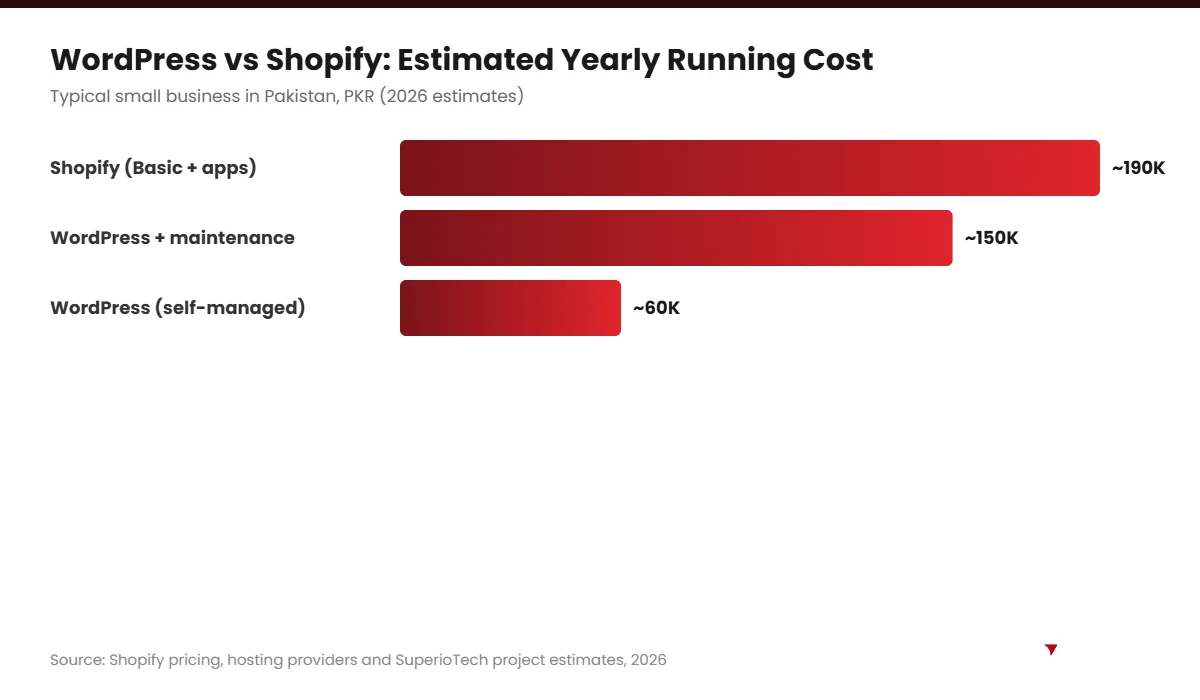
Cost is usually the deciding factor for small businesses. Here is an estimated comparison of yearly running costs in PKR.
| Cost item | WordPress (WooCommerce) | Shopify |
|---|---|---|
| Platform fee | Free | ~8,000 – 11,000 / month |
| Hosting | 15,000 – 40,000 / year | Included |
| Domain | 3,000 – 5,000 / year | 3,000 – 5,000 / year |
| Theme | 0 – 25,000 one-time | 0 – 100,000 one-time |
| Plugins / apps | 0 – 30,000 / year | 0 – 15,000 / month |
| Maintenance | 5,000 – 15,000 / month (optional) | Mostly included |
These are estimates and change with the dollar rate. In short, WordPress is usually cheaper to run, but it needs regular care. Shopify costs more each month, but Shopify handles the technical side.
For a full price breakdown, see our guide on WordPress website cost in Pakistan.
Ease of Use
Shopify wins on ease of use. You sign up, pick a theme and start adding products. There are no updates, backups or server settings to worry about.
WordPress has a learning curve. You manage plugins, updates and backups. However, once your site is set up, daily tasks such as adding posts or products are simple.
Design and Flexibility
WordPress offers almost unlimited design freedom. With page builders and custom themes, you can build any layout. Also, you can add booking forms, portfolios, quote calculators and more.
Shopify themes look clean and modern. However, deep changes need Liquid code or paid apps. So, Shopify is flexible for stores but limited for other site types.
SEO: Which Platform Ranks Better?
Both platforms can rank well on Google. Still, WordPress gives you more control. You can edit URLs freely, use plugins like Yoast SEO and build a strong blog.
Shopify covers SEO basics, such as meta titles and alt text. However, it adds fixed URL parts like /products/ and /collections/. For content-heavy SEO, WordPress usually performs better.
New to SEO? Start with our guide on what SEO is and how it works.
Payments and Delivery in Pakistan
Shopify Payments is not available in Pakistan. So, Shopify stores use COD, bank transfer and local gateways. WordPress stores use the same options through WooCommerce plugins.
- Cash on delivery: works on both platforms.
- Local gateways: PayFast, Safepay and bank gateways connect with both.
- Couriers: TCS, Leopards, PostEx and Trax offer plugins or apps for both.
Security and Maintenance
Shopify handles security, SSL and updates for you. Therefore, you do not need a developer for basic upkeep.
WordPress needs regular updates, backups and security checks. If you skip them, your site can slow down or get hacked. That is why many businesses use a website maintenance service.
Not Sure Which Platform to Pick?
Get Expert Advice From SuperioTech
We build on both WordPress and Shopify, so we will recommend what fits your business, not what is easier for us.
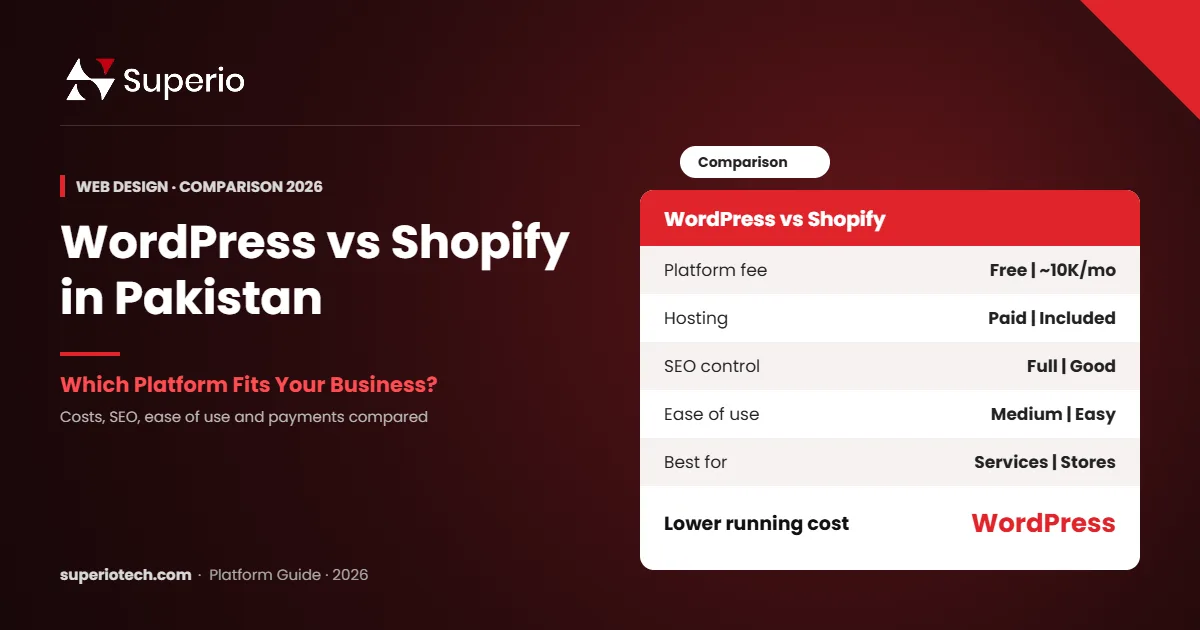
WordPress vs Shopify: Side-by-Side Summary
| Factor | WordPress | Shopify |
|---|---|---|
| Best for | Services, blogs, custom stores | Product stores |
| Running cost | Lower | Higher (monthly fee) |
| Ease of use | Medium | Easy |
| SEO control | Full | Good |
| Maintenance | You manage it | Shopify manages it |
| Design freedom | Unlimited | Theme-based |
Which One Should You Choose?
Choose Shopify If…
- You sell physical products and want to launch fast.
- You do not have a technical person on your team.
- You prefer a fixed monthly fee over managing hosting.
Choose WordPress If…
- You offer services, such as a clinic, law firm or agency.
- You want to grow through blogging and SEO.
- You want lower running costs and full ownership.
From our agency experience, product brands with 50+ items often do well on Shopify. Meanwhile, service companies almost always get better results on WordPress. If you want a detailed store comparison, read WooCommerce vs Shopify.
Need help with either platform? SuperioTech builds both. See our Shopify website design services.
WordPress vs Shopify: Real Business Scenarios
Comparisons are useful, but real situations make the choice clearer. Here are common scenarios we see at SuperioTech.
A Clothing Brand in Lahore
The brand sells 150 products, runs Instagram ads and wants to launch quickly. In this case, Shopify is usually the better fit. It handles product variants, checkout and apps easily, and the team does not need a developer for daily work.
A Dental Clinic in Karachi
The clinic needs service pages, a booking form, doctor profiles and a blog for local SEO. Here, WordPress wins clearly. It is cheaper to run and far better for content and local search.
A B2B Supplier in Faisalabad
The supplier needs product catalogues, quote request forms and wholesale pricing. WordPress with WooCommerce and a few plugins usually offers more flexibility at a lower cost.
A Skincare Startup in Islamabad
The founders want a beautiful store, subscriptions and influencer tracking. Shopify’s app ecosystem makes this easy, so Shopify is often the faster route.
WordPress vs Shopify: Speed and Performance
Website speed affects both SEO and sales. Shopify stores are hosted on Shopify’s global infrastructure, so basic speed is usually good. However, heavy apps and large images can still slow them down.
WordPress speed depends on your hosting, theme and plugins. With good hosting and caching, WordPress can be very fast. On the other hand, cheap shared hosting and too many plugins make it slow. You can test any site for free with Google PageSpeed Insights.
- Shopify: good speed by default; watch your app count.
- WordPress: speed depends on setup; choose quality hosting.
WordPress vs Shopify: Which Platform Scales Better?
Both platforms can grow with your business. Shopify scales smoothly for high order volumes, because Shopify handles servers and traffic spikes. For example, during an Eid sale, you do not need to upgrade hosting.
WordPress can also handle large stores and big traffic. However, you must upgrade hosting and optimise the site as you grow. In return, you get full control over features and costs.
WordPress vs Shopify for Blogging and Content
If content marketing is part of your plan, this point matters a lot. WordPress started as a blogging platform, so its editor, categories, tags and SEO plugins are excellent. As a result, it is ideal for businesses that want to rank for many informational keywords.
Shopify has a built-in blog, but it is basic. You can publish posts, yet advanced layouts and SEO features need apps or custom code. Therefore, content-heavy brands sometimes run Shopify for the store and WordPress for the blog.
WordPress vs Shopify: Ownership and Control
With WordPress, you own your website files and database. You can move hosts anytime. This gives you long-term independence.
With Shopify, your store lives on Shopify’s platform. You can export products and customers, but you cannot move the store itself to another host. For most store owners, this is acceptable. Still, it is worth knowing before you decide.
Our Recommendation for 2026
| If you are… | We usually recommend |
|---|---|
| A product brand that wants to launch fast | Shopify |
| A service business or professional firm | WordPress |
| A content-led brand that relies on SEO | WordPress |
| A small store on a very tight budget | WordPress + WooCommerce |
| A growing brand with no technical staff | Shopify |
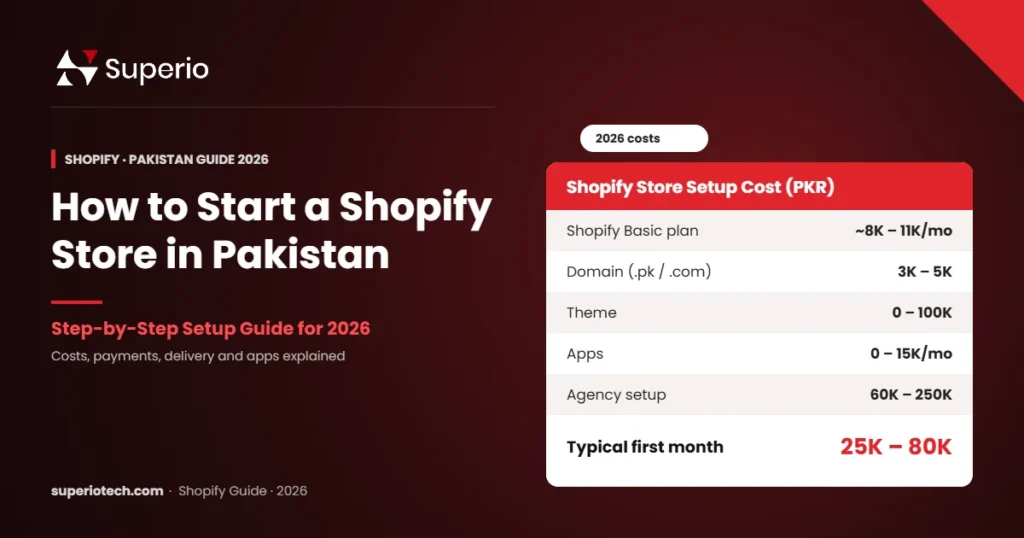
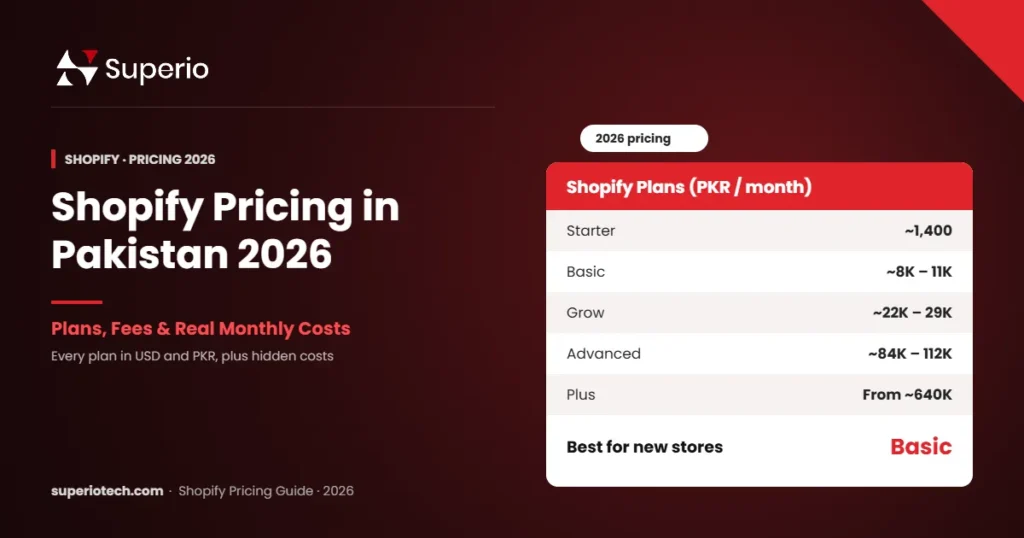
In the end, the WordPress vs Shopify decision is not about which platform is “best”. Instead, it is about which one fits your products, budget, team and growth plan. If you are still unsure, read our step-by-step guide on starting a Shopify store in Pakistan or check Shopify pricing in Pakistan before you choose.
Questions to Ask Before You Decide
- Do I mainly sell products or services?
- Who will manage the website every day?
- How much can I spend each month on platform costs?
- How important is blogging and SEO for my growth?
- Do I need special features, such as bookings or quotes?
Answer these honestly, and the right platform usually becomes obvious.
Conclusion
The WordPress vs Shopify choice depends on your business model. Shopify suits product sellers who want speed and simplicity. WordPress suits service businesses and brands that want SEO, control and lower running costs.
Still unsure? Talk to SuperioTech. We will look at your goals and budget and recommend the right platform honestly.
Ready to Build Your Website?
Book a Free Strategy Session
Share your goals and budget, and our team will plan the right platform and setup for you.